

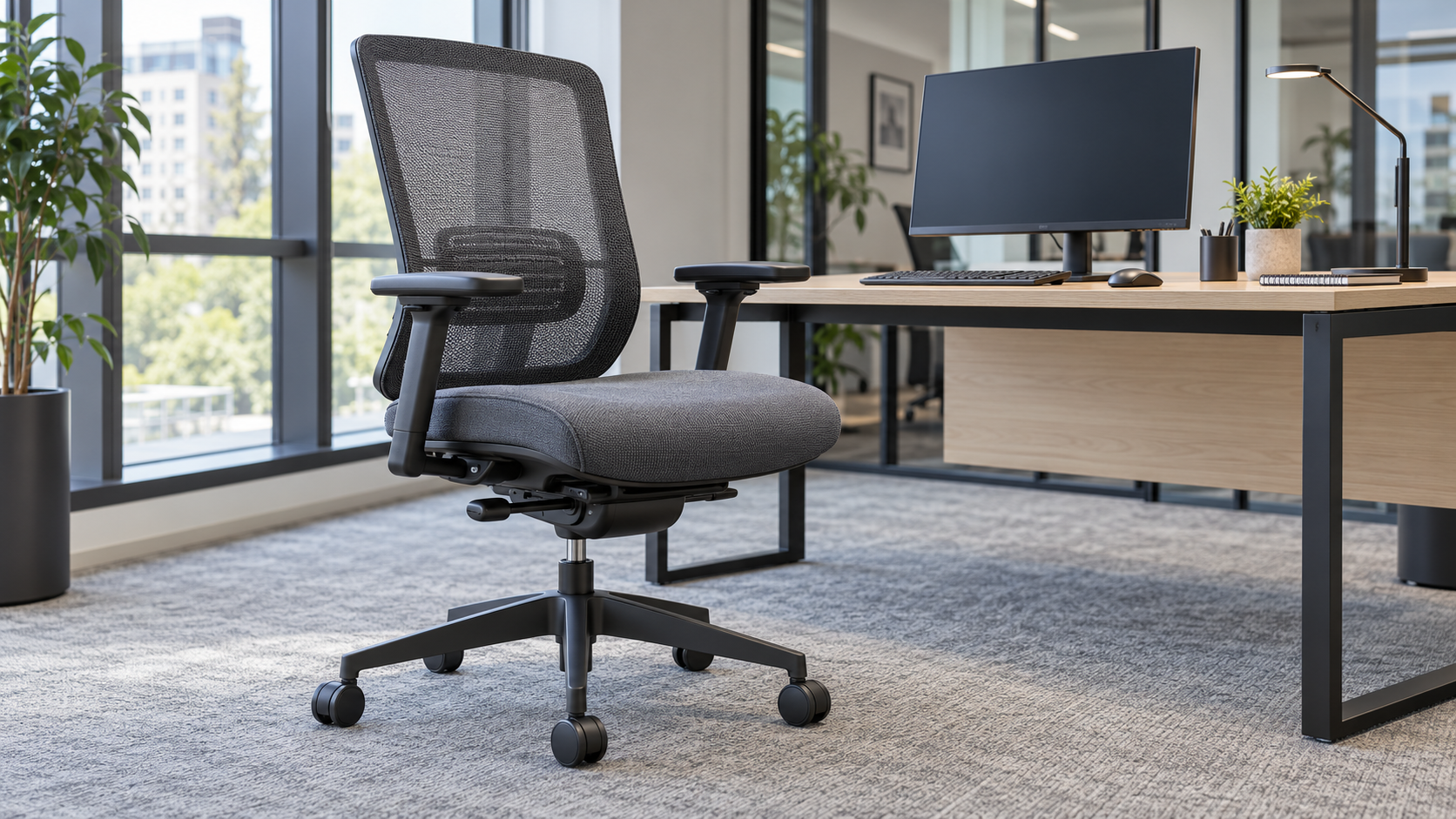
There is no single best chair for long working hours. There is a chair that fits a particular person, at a particular desk, doing particular tasks, with enough adjustment to be set up properly and a build that keeps its settings. That is why one model can be praised by one team and quietly abandoned by another.
This guide helps you narrow the field, trial candidates properly and ask suppliers the right questions, whether you are buying one chair or fifty. For wider background on chair types and standards, see Florenzo’s ergonomic office seating guide; this article concentrates on selection and trial.
Start with the people, not the product
Before comparing chairs, write down who will sit in them and what they do.
Proportions. Leg length, torso height and build vary far more than most specifications allow for. A seat that suits someone short may leave a taller colleague with their knees well above their hips.
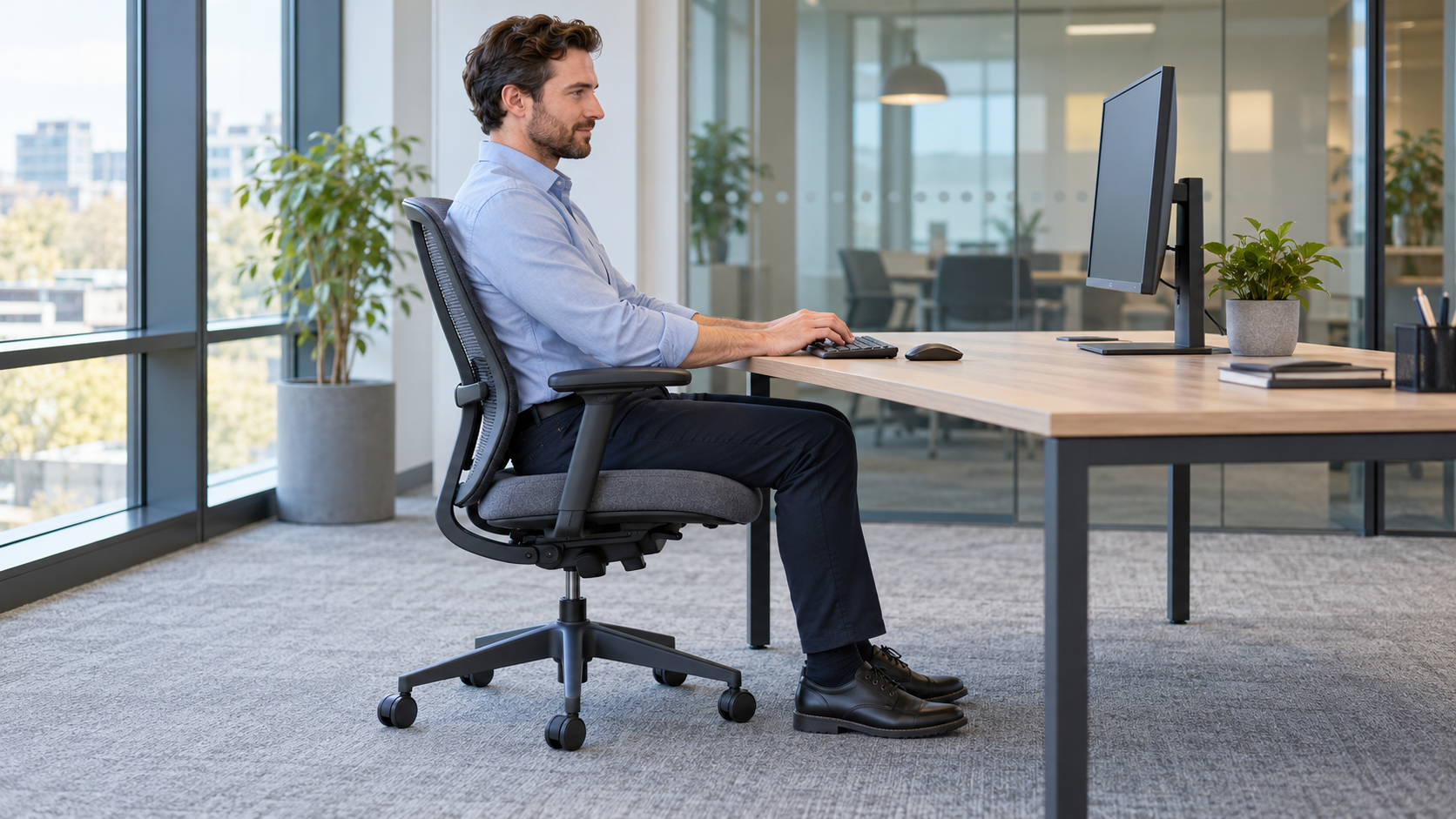
Desk setup. A chair cannot be judged in isolation. HSE’s good posture guidance describes a keyboard just below elbow height, a seat height that supports the front and back of the thighs equally, and a gap of 2–3 cm between the front of the seat and the back of the knee. If the desk is fixed, the chair’s height range has to work with it.
Tasks. Typing all day, switching between phone and screen, handling paperwork and turning to colleagues all produce different postures. A chair that suits one pattern can frustrate another.
Shared or individual use. One person on one desk can set a chair up once. Hot desks and rotating shifts need controls that are obvious and a range that suits many bodies.
The features that matter most
Seat height and depth
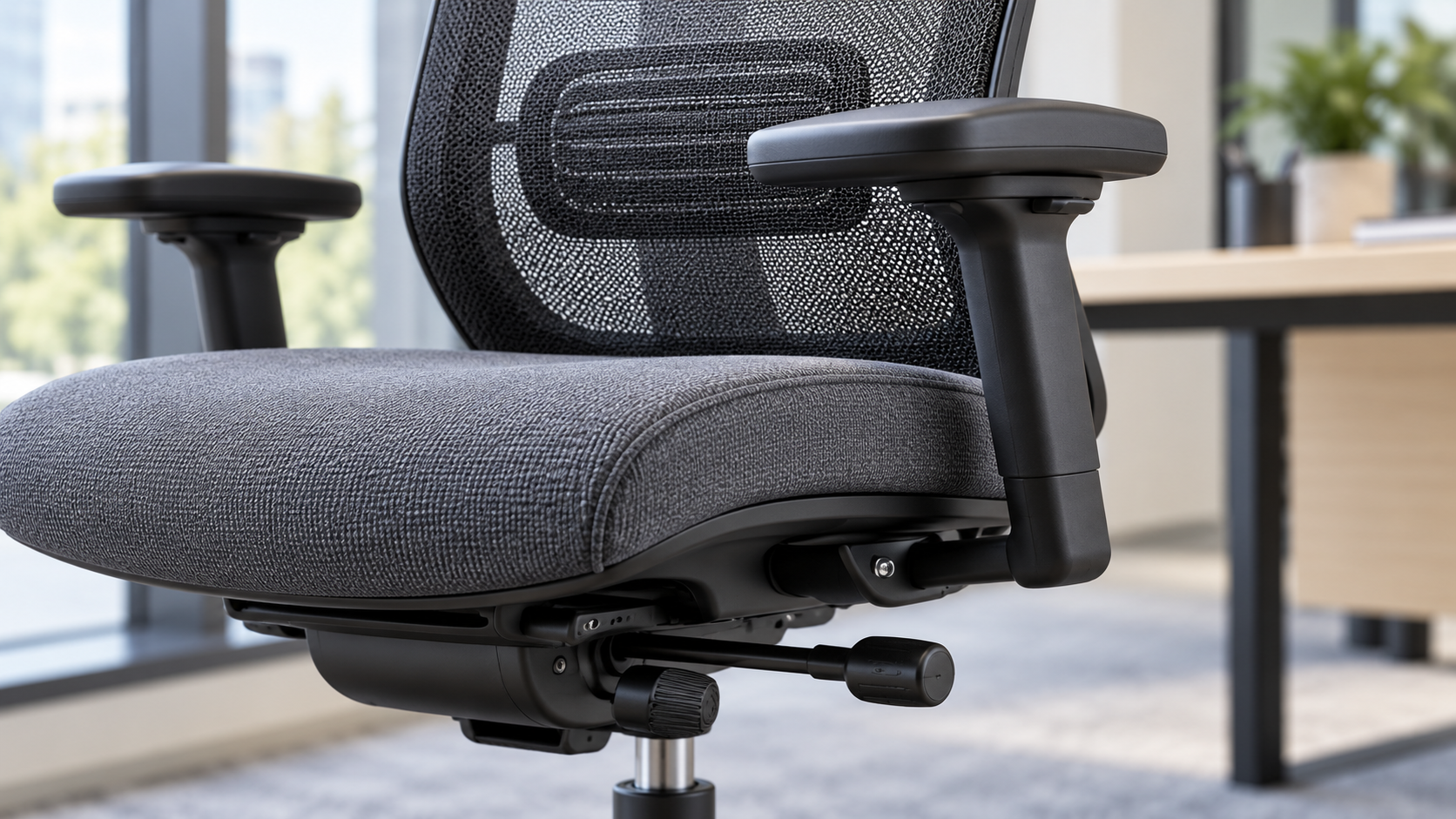
Height adjustment decides whether feet are supported and where the forearms meet the desk. Check the minimum and maximum, not just whether a lever exists. Seat depth is easily overlooked: too deep and users either lose the backrest or feel pressure behind the knees; too shallow and the thighs lose support. A seat slide helps where users differ in height. Florenzo’s posture seating collection lists ergonomic models; confirm each model’s actual controls before ordering.
Lower-back support
What matters is that the support meets the lower back at the right height for the person sitting. A fixed contour suits people whose proportions happen to match it. An adjustable backrest or lumbar section gives more people a chance of a good fit.
Armrests
Arms help when they are set correctly and hinder when they are not. If they are too high they push the shoulders up; if they are too wide or long they stop the chair reaching the desk, so people lean forward. Height adjustment is the sensible baseline.
Tilt and controls
A tilt mechanism lets users change position, which matters over a long day. Look for tension that can be matched to the user and a way to hold the backrest upright for focused work. Controls that are fiddly or hidden tend to go unused, so test whether you can find and operate them without help.
How to run a proper chair trial
A thirty-second sit in a showroom tells you very little. Aim to trial each candidate for a realistic working session, with the person who will use it, at a desk as close as possible to their own.
- Set it up first. Adjust height, depth, backrest and arms before judging anything.
- Reach the keyboard. Can you type with relaxed shoulders and forearms roughly level, without perching on the front edge?
- Sit fully back. Does the backrest meet your lower back while your thighs are supported?
- Check your feet. They should rest on the floor, or on a footrest if the desk height forces the chair up.
- Feel the seat edge. Any pressure behind the knees suggests the seat is too deep or the front edge is too firm.
- Change position. Lean back, sit upright, shift your weight. Does the chair follow you without fuss?
- Return to it. Note how it feels again after the working session, not just at the start.
If you are buying for a team, include your shortest and tallest users.
Mesh or upholstery?
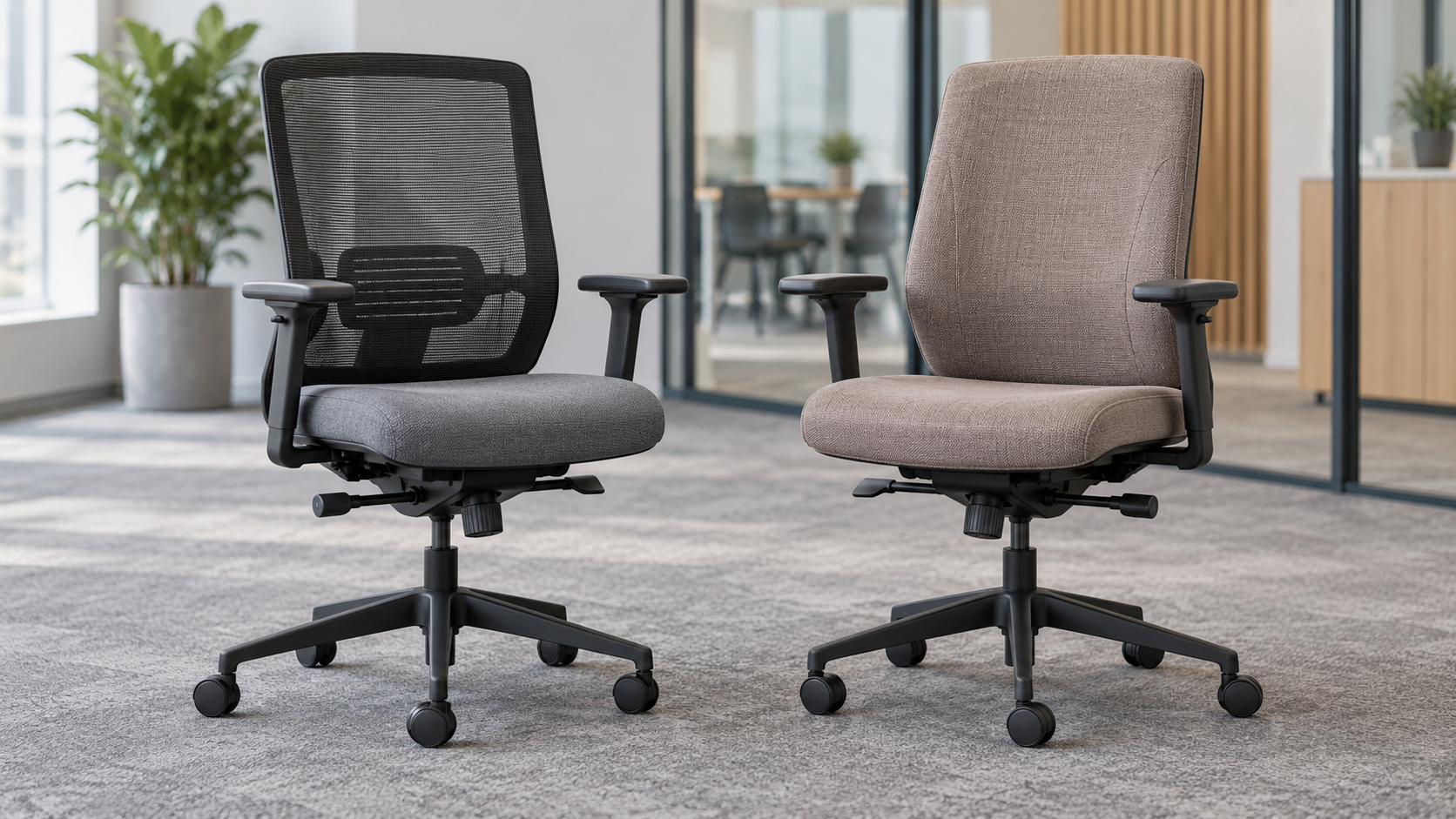
Neither is better across the board. Mesh seating generally runs cooler and suits warm offices, but support depends on the frame and mesh tension, and some people find it firm. Upholstered seats can feel more forgiving at first; the trade-off is that foam can compress with age and heat can build up. For long hours, favour the option that holds its support over time rather than the one that feels softest on the first sit.
A quick decision table
| Situation | Prioritise | Watch out for |
|---|---|---|
| One person, fixed desk, all-day typing | Good fit and adjustment at the lower back, seat depth | Buying on appearance alone |
| Shared or hot-desk chairs | Obvious controls, wide height range | Complicated mechanisms nobody uses |
| Warm or crowded office | Breathable back or seat | Mesh that feels too firm |
| Users of very different sizes | Seat depth and backrest height adjustment | Fixed shapes that suit only some |
| Continuous or multi-shift use | Stated usage rating and weight limit for that exact model | Generic “24-hour” labels with no detail |
Hours, weight limits and multi-shift use
Ask how many hours a day the chair is intended for and what user weight it is rated for. Do not rely on a general category: a stated weight limit and intended-use rating belong to a specific model, and you should get them in writing. For several people sharing a chair across shifts, durability, easy adjustment and a suitable rating matter more than they do for occasional use. Florenzo’s heavy-duty and 24-hour collection is the place to start looking for continuous-use needs. As “24-hour” has no single universal definition, ask the supplier what the rating means for the chair you are considering.
Durability, warranty and after-sales
Rather than hoping a chair lasts, ask direct questions:
- What does the warranty cover for this model, and for how long? Are the gas lift, mechanism and castors included?
- Can spare parts such as castors and arms be supplied?
- Can the same model and finish be reordered later if your team grows?
- Is there evidence of testing for this specific chair, rather than for the brand in general?
Setup, breaks and changes of activity
A well-chosen chair still needs setting up, and it does not replace movement. HSE’s guidance on work routine and breaks says employers must plan DSE work so there are breaks or changes of activity, that short, frequent breaks are better than longer, rarer ones, and gives 5 to 10 minutes every hour as an example. Breaks should let people get up, move or at least stretch and change posture. A short handover on the chair’s controls, given on the day it arrives, helps too.

A hypothetical example
Imagine a twelve-person finance team that orders identical chairs after one person tries a sample. Two months on, a taller colleague’s knees sit high, a shorter one’s feet dangle and a third has removed the armrests because they catch on the desk. The model was never trialled across the team. A better route: shortlist two or three chairs, have the shortest and tallest users work in each for a session, check seat depth and arm height, and confirm the weight rating. This example is hypothetical.
Before-you-buy checklist
- Noted who will use the chair and for how many hours a day.
- Checked height range against the desk.
- Tested seat depth, lower-back support and armrests with real users.
- Confirmed the weight limit and intended usage for the exact model.
- Asked for the warranty terms, spares and reorder options in writing.
- Planned a handover and regular breaks.
Frequently asked questions
Is a more expensive chair always better for long hours?
No. Price can reflect adjustment range, materials and build, but none of that helps if the chair does not fit the person. A modestly priced chair that adjusts properly may suit someone better than a costly one that does not.
Can the right chair stop discomfort from long sitting?
It can reduce some risk factors, but it cannot promise to prevent every problem or replace movement. Desk, screen and keyboard positions matter, and so do regular breaks. If someone has ongoing pain, they should speak to a healthcare professional or their employer’s DSE process.
What should I ask a supplier about weight limits and all-day use?
Ask for the stated weight limit and intended hours of use for the specific model, what testing supports them, and what the warranty covers. If the answer is a general claim about a whole range, ask again for the model you are buying.
Your next step
Shortlist two or three chairs, trial them with real users, and get specifications and warranty terms in writing before you order. If you would like to discuss a larger purchase, contact Florenzo Furniture. Florenzo is an importer, distributor and wholesaler, and its contact page lists a Blackburn showroom; ask what viewing or sampling options exist for the models you are considering.