

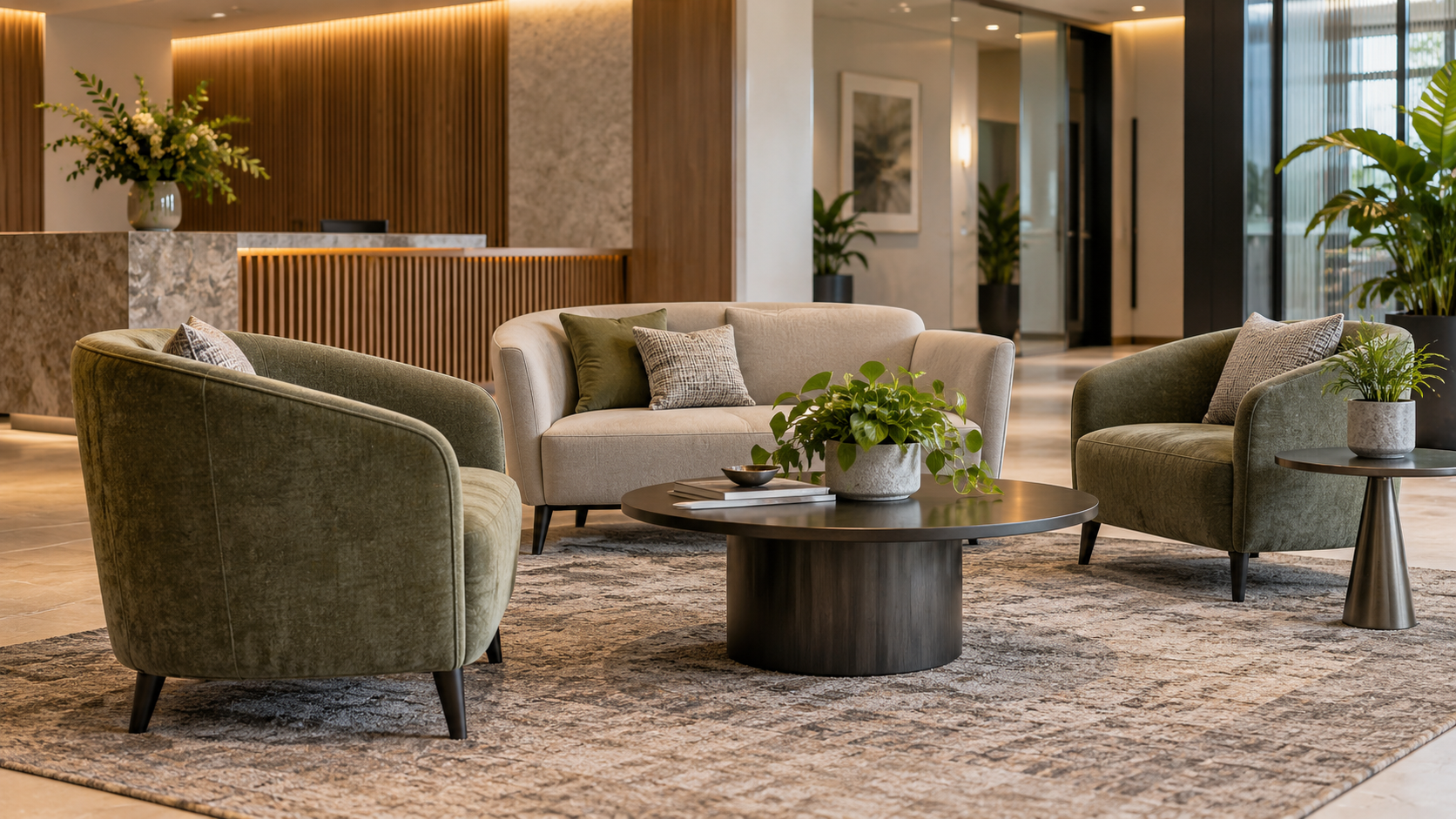
Most offices have the corner. A sofa and two armchairs sit in the space nobody could find a use for and a year later they’ve barely been touched. Meanwhile, people are holding catch-ups at the end of a desk or eating lunch at a screen. For businesses considering luxury breakout furniture in the UK, that unused corner is often the first problem to solve.
Luxury breakout furniture is meant to solve that problem. But buying it well takes more than choosing pieces that look good in a showroom photo. The seating has to suit the people using it, the room it sits in and the amount of wear it will take. This guide covers what breakout furniture is, what “luxury” does and doesn’t tell you, and how to buy it sensibly for a UK workplace.
What Is Breakout Furniture?
Breakout furniture is seating and small tables for informal use away from the desk: short conversations, a coffee, a phone call, or a few minutes waiting for someone. It isn’t meeting-room furniture, where people sit upright around a table for an hour. It isn’t task seating either, where ergonomics and adjustability matter most.
In UK trade catalogues you’ll see the same pieces sold as breakout seating, soft seating, office lounge furniture or reception seating. The categories overlap because a good armchair works in a waiting area or a staff lounge. What separates them is the job each space does and that should drive the specification.
What Makes Breakout Furniture “Luxury”?
There’s no British Standard that defines luxury furniture. The word is a marketing term, so it helps to know what it usually points to.
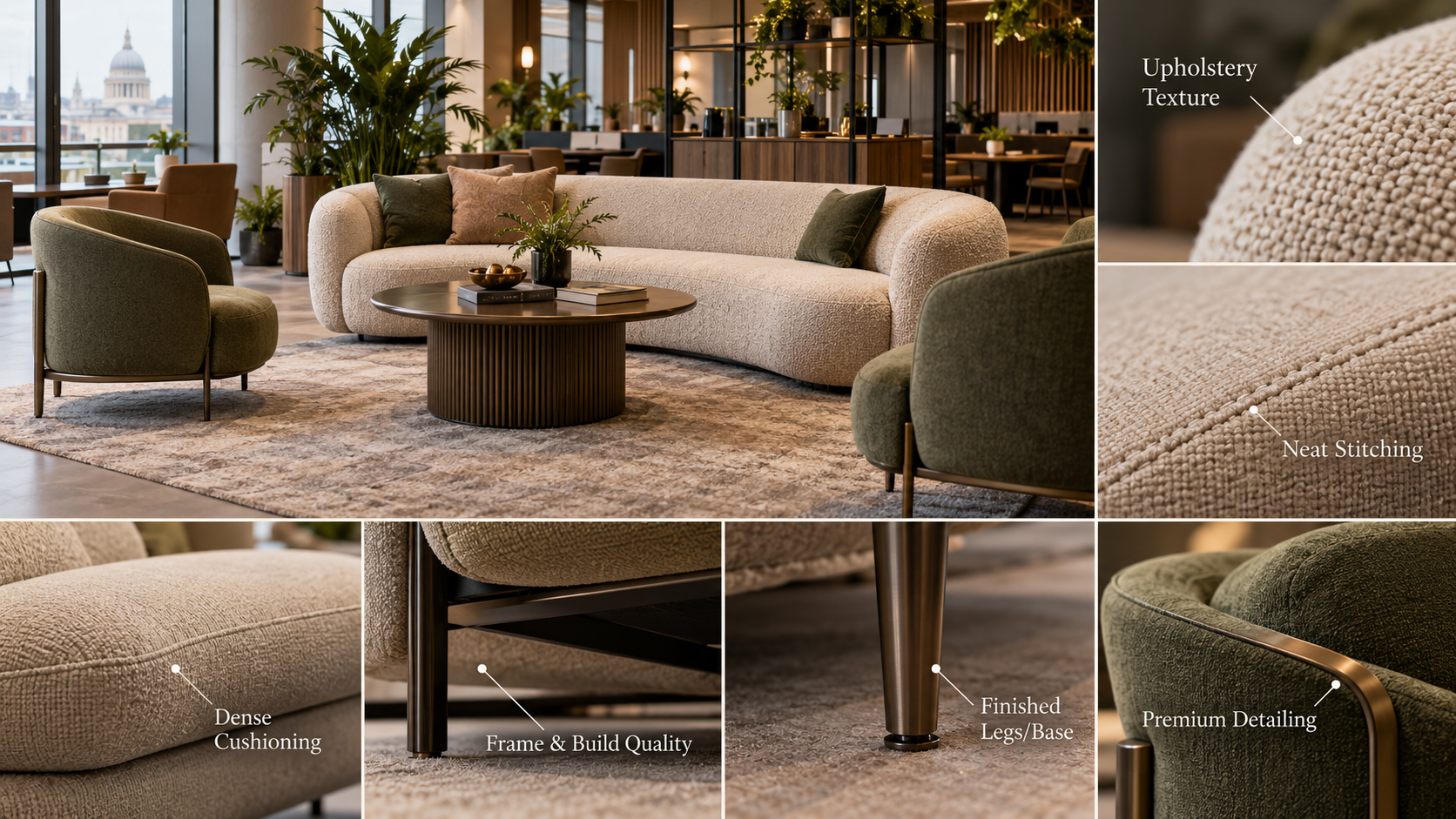
- Construction. A properly built frame, quality foam that holds its shape, and joints that stand up to repeated use.
- Upholstery. Fabrics or coverings chosen for abrasion resistance and cleaning as well as colour and feel.
- Detailing. Neat stitching, well-finished legs and bases and proportions that look considered rather than copied.
- Comfort. Seat height, depth and back angle that people can sit in comfortably for longer than five minutes.
A higher price doesn’t guarantee a longer life. A pale, delicate fabric on an expensive sofa can look tired within months in a busy reception. A plainer piece with a hard-wearing cover and a solid frame may outlast it. Luxury is worth paying for when it describes how the furniture is built and finished. When it only describes how the brochure reads, it isn’t.
Why Are Breakout Spaces Important in Modern Workplaces?
Offices have changed. Many people now come in to meet colleagues, not just to sit at a desk and the space needs to support that. A breakout area gives people a place for unplanned conversations and a break from the screen. It also takes pressure off meeting rooms that are too formal for a ten-minute chat.
The catch is that a breakout area only helps if people use it. Spaces tend to fail for ordinary reasons:
- The area sits in a dead corner, away from where people actually walk.
- The seating is too low or too deep to be comfortable.
- It’s too exposed for a conversation, or too noisy for one.
- There’s nowhere to put a drink or a laptop.
Get those basics right and the room tends to look after itself. This is where good furniture choices matter most.
What Types of Luxury Breakout Furniture Are Available?
Sofas and modular seating
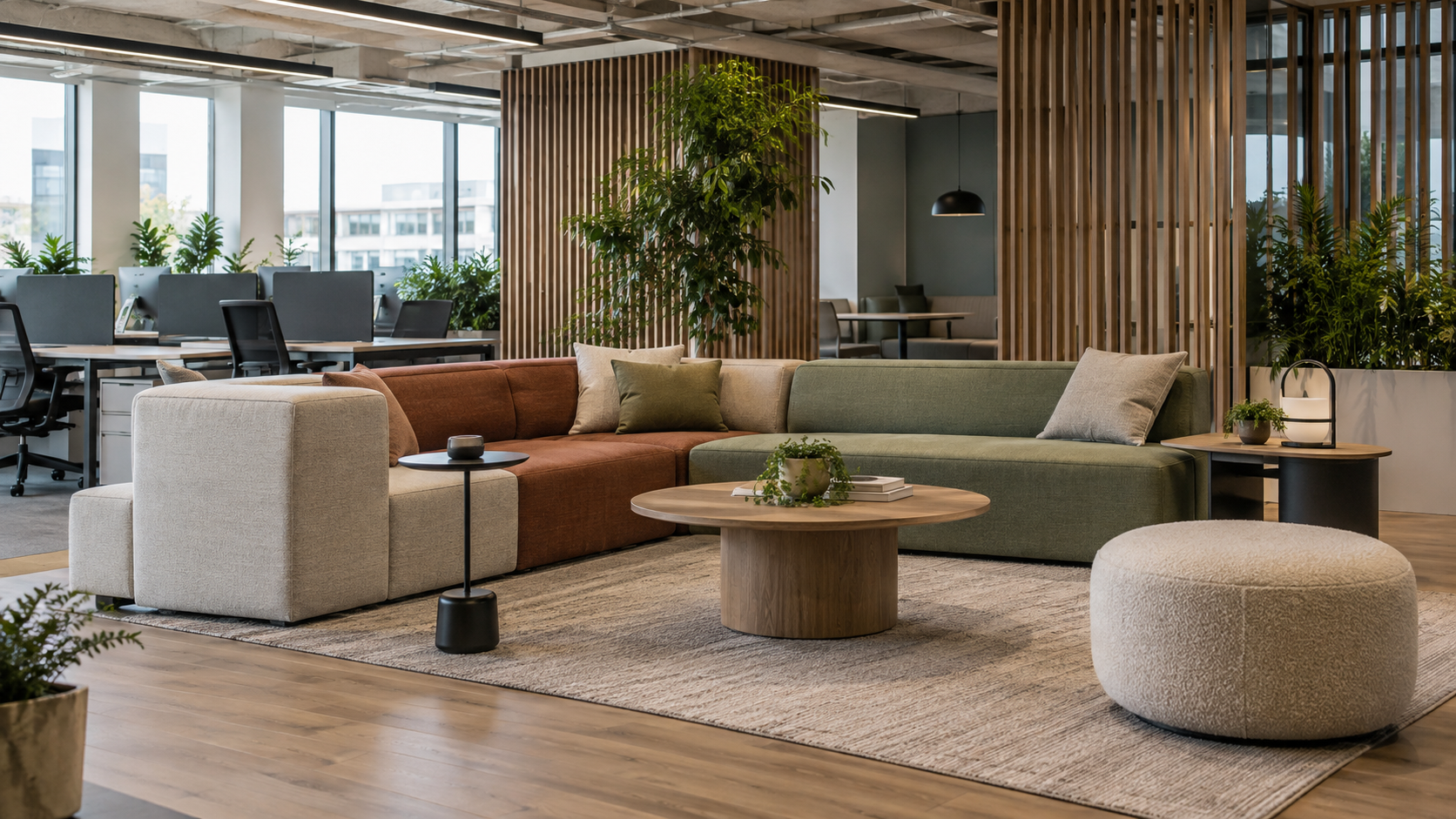
Sofas suit larger areas where several people sit together. Modular seating is more flexible. Units can be arranged as a straight run, an L-shape or a loose cluster, then rearranged when the space is used differently. That’s useful in offices that change layout or need to adapt to hybrid working patterns.
Armchairs and tub chairs
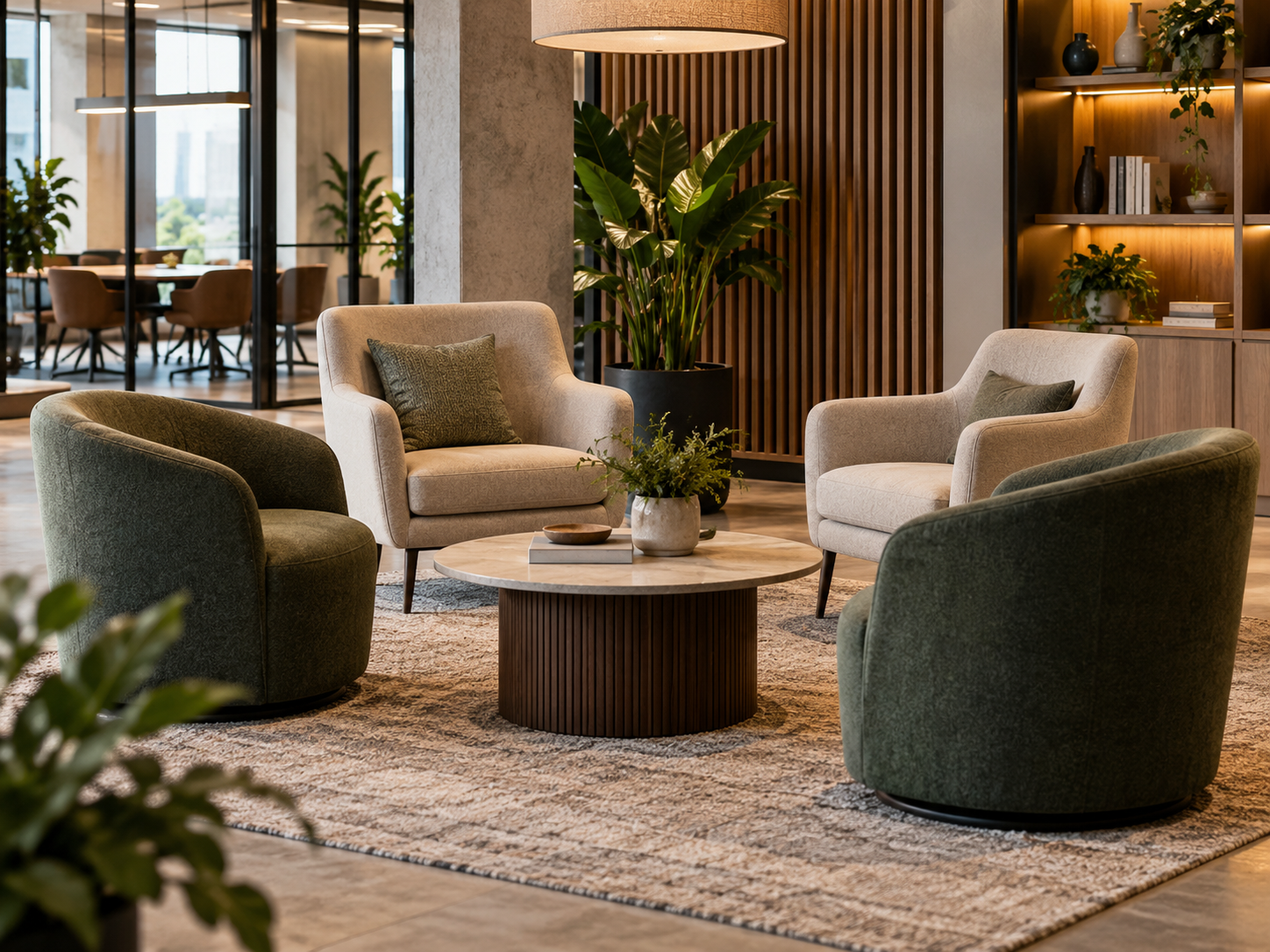
Armchairs and tub chairs work in smaller footprints and give people more personal space. Tub chairs wrap around the sitter, which gives a sense of enclosure that many people find comfortable for conversation. Check arm height and seat height if people will use the space for extended periods, since a chair that’s hard to get out of will be avoided by some users.
High-back and semi-private seating
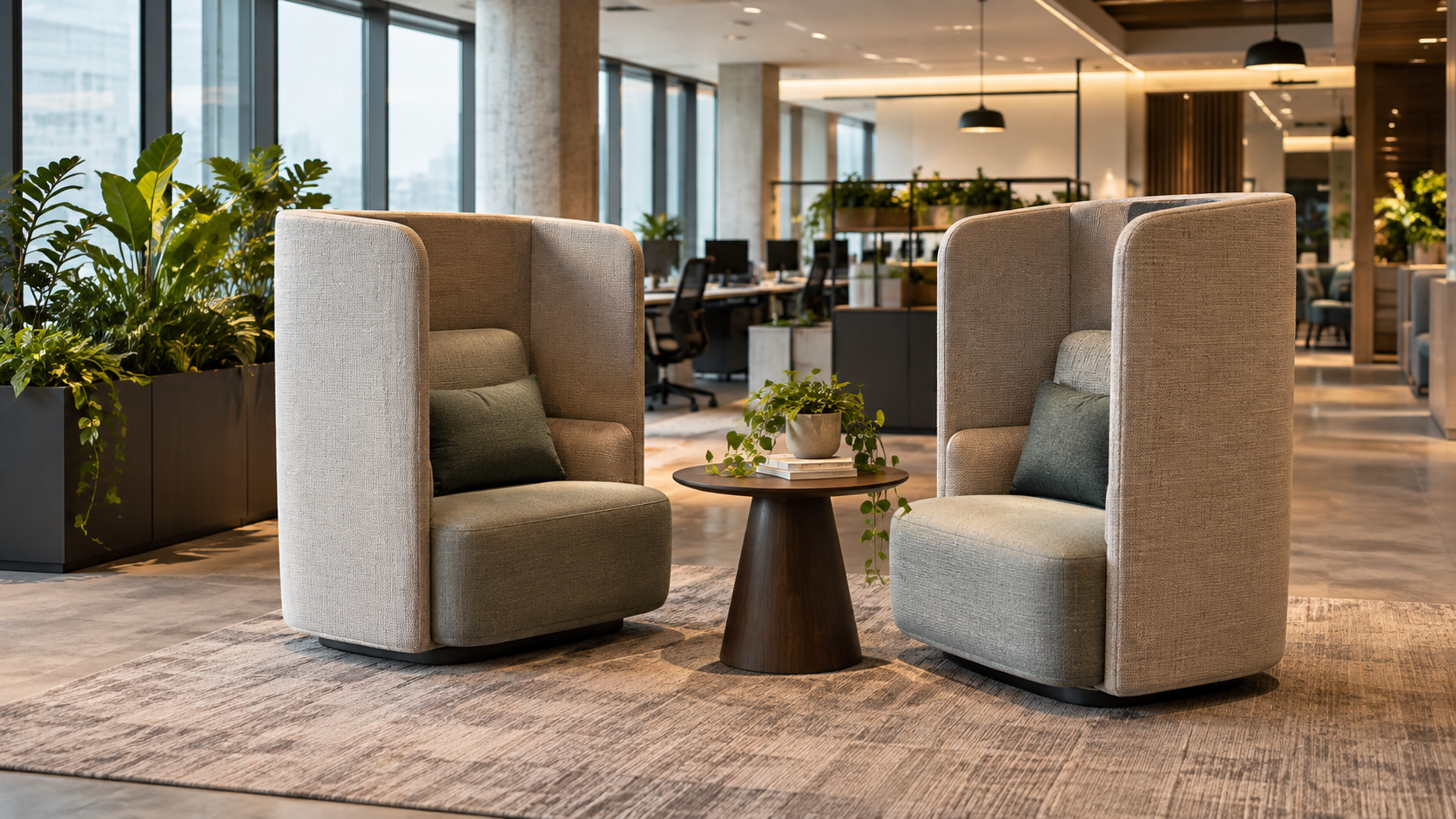
High-backed pieces cut sightlines and soften noise, which makes them useful in open-plan offices where privacy is limited. They don’t create a closed room, and they won’t soundproof a space, but they can make a quiet conversation feel less exposed.
Stools and high tables
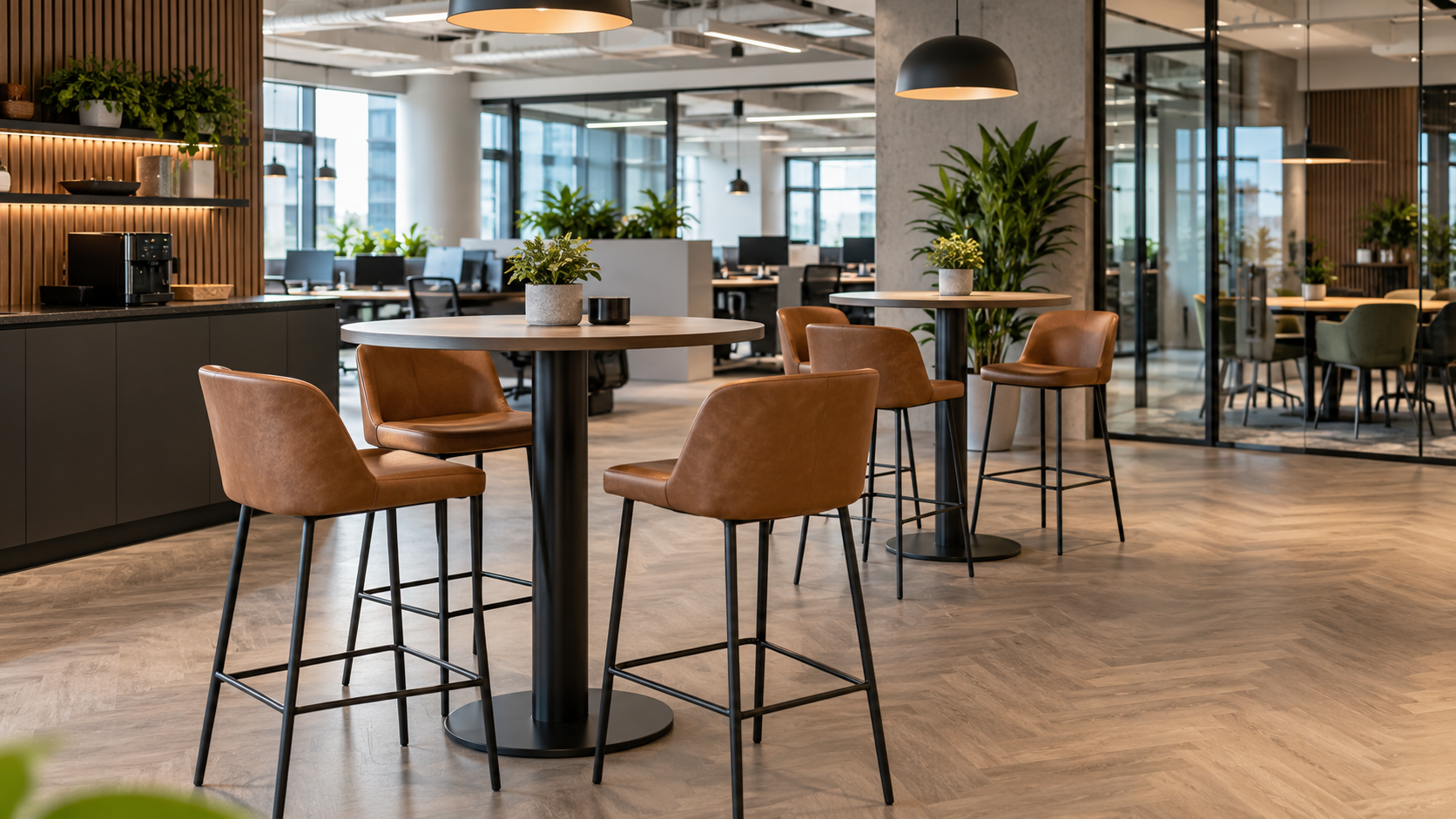
Stools and high tables work for quick stand-up conversations and informal lunches. They take less floor space than lounge seating and encourage shorter stays, so they suit busy circulation areas.
Coffee tables, side tables and collaborative furniture
Tables are easy to overlook, but a lounge area without them is awkward to use. A low table gives people somewhere for a cup or a laptop, and a side table next to an armchair does the same job in less space. Tables should match the height and style of the seating, otherwise the arrangement never quite looks right.
Where Can Breakout Furniture Be Used?
Offices. Staff lounges, kitchen-adjacent areas and open-plan “neighbourhoods” are the obvious places. Here the priority is usually comfort and flexibility.
Reception areas. A visitor’s first impression is formed in minutes. Reception seating takes wear from many different people and needs to look good all day, so cleaning and durability matter as much as appearance. Florenzo’s classic reception and breakout and reception ranges sit in this overlap.
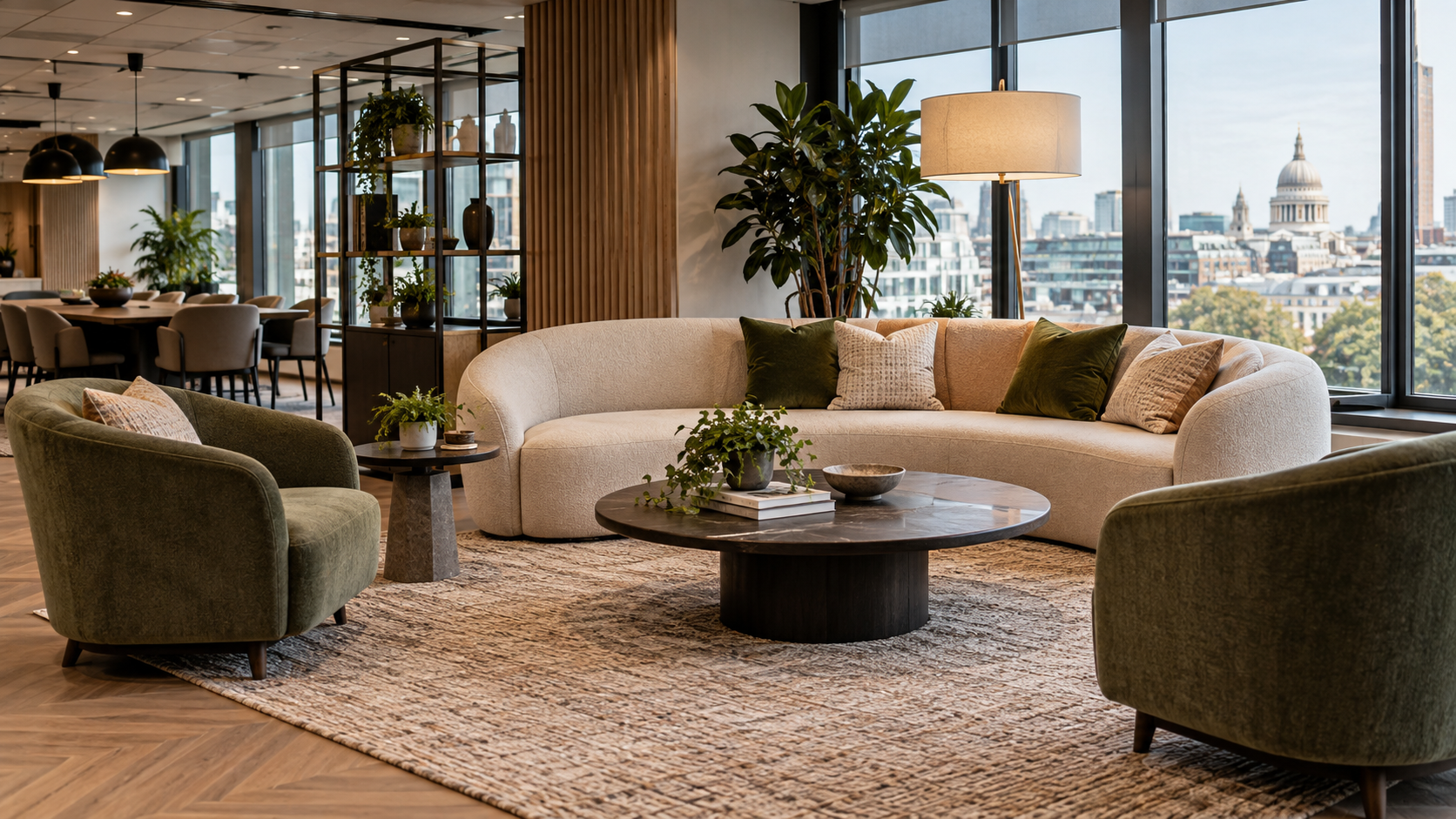
Meeting spaces. Soft seating outside meeting rooms gives early arrivals somewhere to wait. Relaxed seating inside smaller rooms can also suit workshops and informal sessions, though it isn’t a replacement for proper conference and meeting seating where long, formal sessions are held.
Schools, colleges and universities. Social areas, libraries and sixth-form spaces use breakout-style furniture. Classroom seating is covered by separate standards and educational chairs are specifically excluded from the main non-domestic seating standard, so check what any supplier has tested against. Dedicated educational seating is the better route for classroom use.
Other commercial spaces. Clinics, co-working spaces, hotel lobbies and waiting rooms all use similar pieces. The heavier the footfall, the more you’ll want to focus on frame strength and cover durability rather than style alone.
How to Choose Luxury Breakout Furniture for a UK Workplace
Start with how the space will actually be used
Before you look at a single catalogue, answer a few plain questions. How many people will use the area at once? Will they stay five minutes or half an hour? Is it a lunch spot, a waiting area or a quiet corner? Will there be food and drink? A lounge used by forty people at lunchtime needs different furniture from a reception that seats three visitors.
Measure, then plan the layout
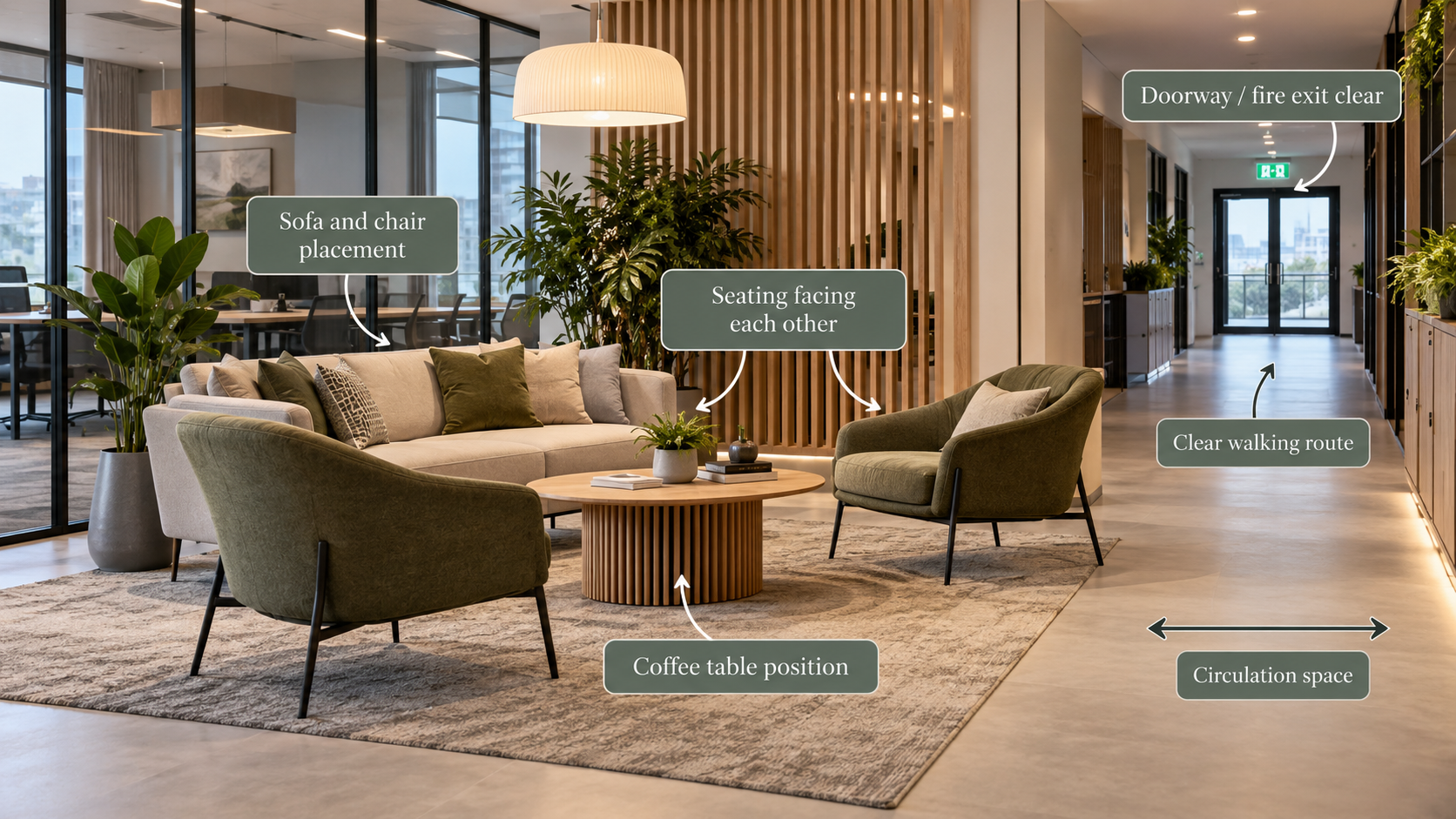
Lounge furniture is bulkier than it looks in photos. Measure the space, then mark out each piece’s footprint on the floor with tape. Leave clear routes through the area and keep seating away from doors and fire exits. Think about where people will naturally face. A sofa pushed against a wall, looking at nothing, rarely gets used.
Check comfort for the people who’ll use it
Seat height and depth matter more than the upholstery. A low, deep sofa feels relaxed but can be difficult to get out of, particularly for older visitors or anyone with limited mobility. HSE’s guidance on seating at work is written mainly with workstation chairs in mind, but its core point holds for any workplace: seating should be assessed against who uses it and for how long. A small mix of seat heights and styles in one area usually works better than a single type repeated.
Think about materials and cleaning
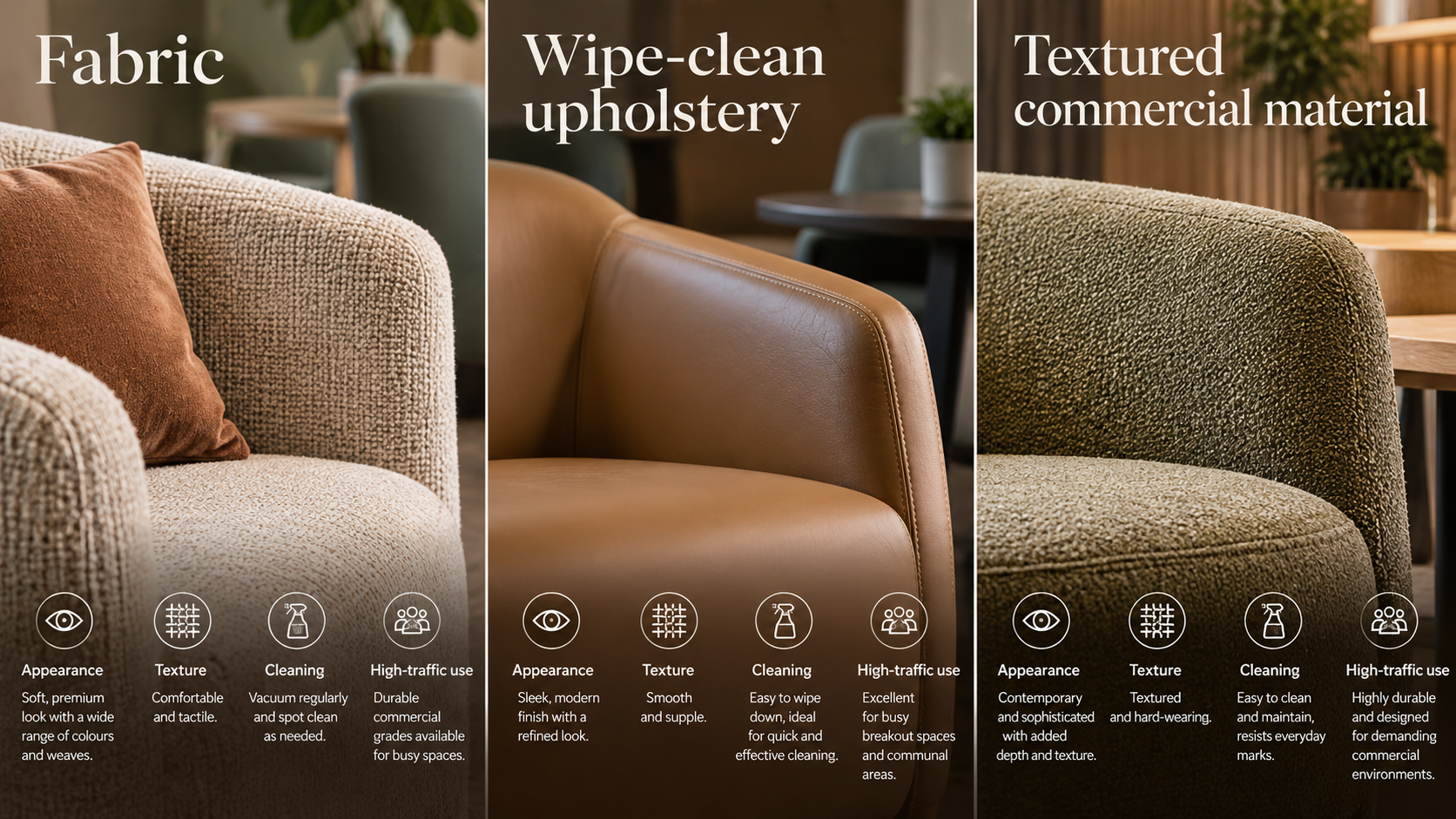
Fabric looks warm and absorbs some sound, but it marks more easily and can need professional cleaning. Wipe-clean coverings suit reception areas and anywhere food is eaten, though some people find them less comfortable in warm rooms. Ask for abrasion test results for any fabric you’re considering. Martindale rub counts are the figure most often quoted in the trade. Darker, textured and patterned finishes tend to hide wear better than pale, plain ones.
Ask what the furniture has been tested against
Two sets of requirements are worth knowing about, and a competent supplier should be able to discuss both.
The first is strength and durability. BS EN 16139 covers safety, strength and durability for non-domestic seating and the current edition is BS EN 16139:2025. It does not cover the durability of upholstery materials, so frame testing and fabric testing are separate questions.
The second is fire safety. The Furniture and Furnishings (Fire) (Safety) Regulations 1988 were written for domestic furniture. For workplaces in England, the person responsible for the premises must carry out a fire risk assessment and the fire performance of upholstered furniture is part of that picture. BS 7176 is the standard used to classify ignition resistance for non-domestic seating, and the right hazard level depends on the building and how it’s used. The Furniture Industry Research Association’s contract flammability guidance explains how the pieces fit together. Fire rules differ in Scotland and Northern Ireland, so check the position for your site.
Plan for delivery, installation and matching
Large pieces need clear access. Check lift sizes, door widths and stairwells before ordering. If you’re furnishing several areas, order together so fabrics and finishes match, since dye lots and product updates can make a later top-up order look slightly off. Ask whether the furniture arrives built or flat-packed and who will place it.
Luxury vs Standard Breakout Furniture: What Is the Difference?
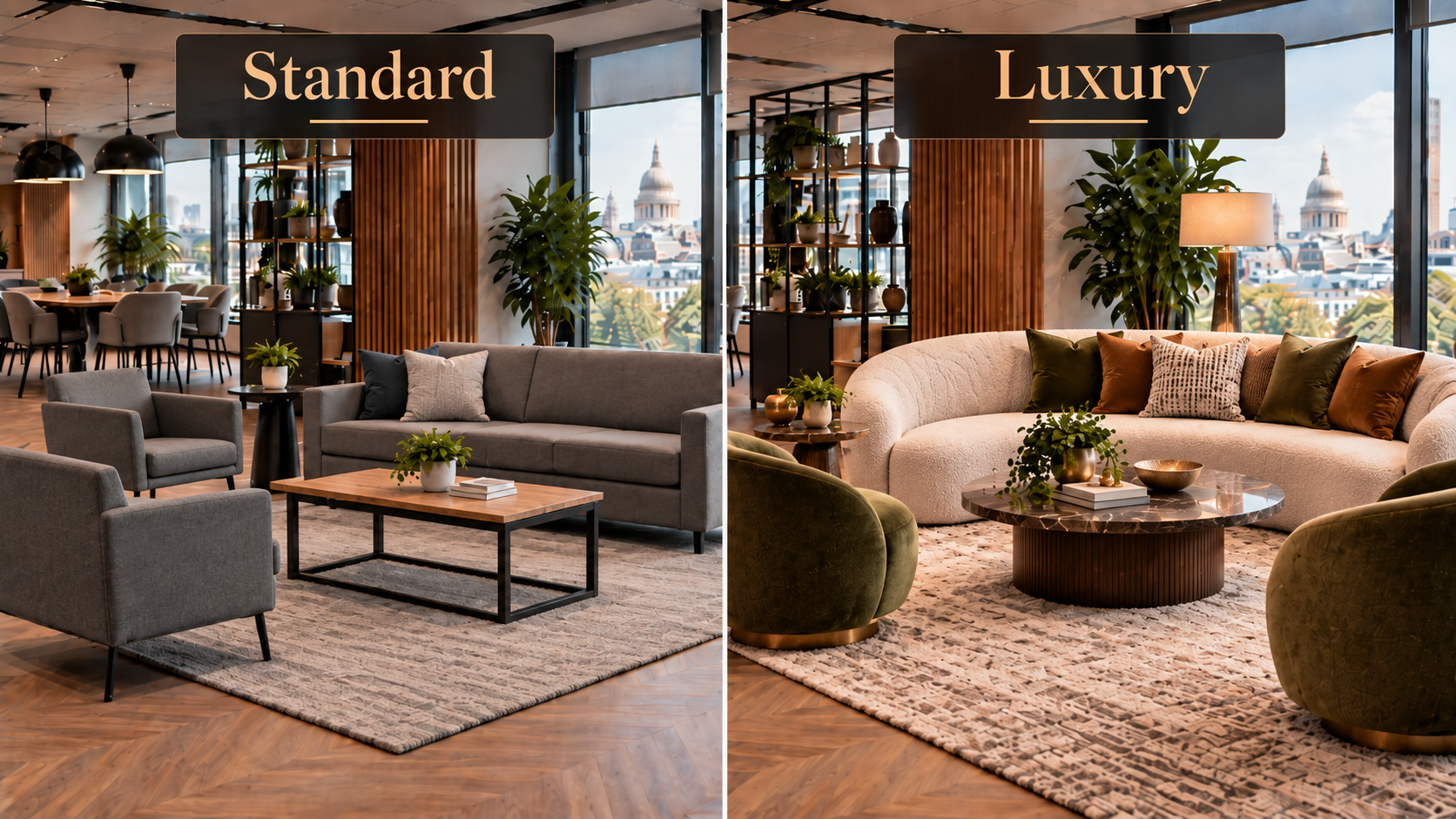
The honest answer is that it depends on the product and not just the price tier.
Higher-end pieces typically have better frames, denser foam, more careful finishing and a design that holds together as a set. In a visible reception or a client-facing lounge, those things justify the cost.
Standard-range furniture can be a sensible choice. In a staff area with moderate use, a well-made mid-priced sofa with a durable cover will often do the job. Where it goes wrong is when “standard” means thin foam, a light frame and a cover that wears in the first year, in a room that gets heavy use.
A practical approach is to spend where wear and visibility are highest. Put the better pieces in reception and in the busiest lounge and use simpler ones in low-traffic corners. Compare construction and test information rather than labels, because neither “luxury” nor “standard” tells you much on its own.
How Much Should Businesses Spend on Breakout Furniture?
There’s no sensible single figure and any article offering one is guessing. The cost depends on:
- Materials and construction. Frame type, foam quality and fabric all affect price.
- Size. A three-seat sofa costs more than an armchair and modular schemes add up quickly.
- Upholstery. Premium fabrics and leather alternatives vary widely.
- Design. Detailed or more complex pieces cost more to produce.
- Durability. Furniture tested for heavier use usually costs more.
- Quantity. Larger orders can sometimes reduce the unit price.
- Customisation. Bespoke colours, fabrics or sizes add cost and lead time.
- Delivery and installation. Often forgotten, but a real part of the total.
When you compare quotes, compare like with like. Ask what’s included and think about cost over the life of the furniture rather than the day-one price. A piece that lasts twice as long at one and a half times the price is the cheaper option. A piece that looks tired after a year isn’t.
How Florenzo Furniture Can Help
Florenzo Furniture is a UK furniture supplier, wholesaler and distributor. It doesn’t make the furniture it sells. That matters when you’re asking specification questions, because the answers come from the supply chain and it’s reasonable to ask for them in writing.
Its website lists a breakout and reception collection covering soft seating, tub chairs, modular units, stools and tables, alongside separate ranges for conference and meeting and classic reception seating. The site also mentions bespoke quotes for bulk orders, custom orders and optional delivery and installation services. If you’re furnishing several spaces and want a consistent look, get in touch with the details of your project and ask for test information and warranty terms alongside the price.
Frequently Asked Questions
What is luxury breakout furniture?
It’s informal seating and tables for commercial spaces, built and finished to a higher standard than entry-level furniture. There’s no official definition of “luxury”, so judge it by construction, upholstery, comfort and test information rather than the label.
What furniture is best for a breakout area?
It depends on the space. Modular sofas suit larger, flexible areas, armchairs and tub chairs work where space is tighter and stools and high tables suit quick, informal use. Most successful breakout areas mix a few types, plus a table or two.
Is breakout furniture suitable for offices?
Yes, and offices are the most common setting. Staff lounges, open-plan areas and spaces near meeting rooms all benefit from relaxed seating, as long as it’s placed where people actually walk and comfortable enough to use.
How do I choose breakout seating?
Start with who will use it and for how long. Then measure the room, plan the layout, check seat height and depth and compare cover durability and cleaning. Ask what the furniture has been tested against for strength and fire performance.
How long should commercial breakout furniture last?
There’s no fixed lifespan. It depends on build quality, how heavily it’s used and how it’s cleaned and maintained. A warranty gives you a minimum assurance, not a forecast, so read what it covers.
Is luxury breakout furniture worth the investment?
In visible, high-traffic areas such as reception, often yes, because appearance and durability both matter there. In low-use areas, a well-made mid-range option may be better value. Spend where wear and visibility are highest.
Can breakout furniture be used in schools?
Yes, in social areas, libraries and common rooms. Classroom seating is covered by separate standards and educational chairs are excluded from the main non-domestic seating standard, so check what any supplier has tested against.
What should businesses consider before ordering breakout furniture?
Think about how the space will be used, the room’s dimensions, who will sit in it, cleaning and maintenance, fire and strength test information, delivery access and total cost including installation. Order matching pieces together where you can.
Final Thoughts
A good breakout area doesn’t come from spending the most. It comes from knowing how the space will be used and choosing furniture that suits that use. Luxury breakout furniture earns its price where construction, comfort and finish match the demands placed on it and not where the word is simply printed on the label.
Measure properly, ask for test information, plan for cleaning and put the best pieces where wear and visibility are highest. A room built that way gets used, which is the whole point.
